- Come to me all you who are lonely
According to many sources, loneliness has become an epidemic in our society. Former U.S. Surgeon General, Dr. Vivek Murthy, issued an urgent advisory in 2023 declaring loneliness an epidemic in the United States.[1] According to this advisory, loneliness is described as a state of mind: “a subjective distressing experience that results from perceived isolation or inadequate meaningful connections, where inadequate refers to the discrepancy or unmet need between an individual’s preferred and actual experience.”[2]
You can feel lonely on your own or in a crowded room.
In the post-pandemic world, people of all ages and walks of life are struggling with loneliness. And the rise of our dependence (and addiction) to our phones and artificial intelligence, it’s only getting worse.[3]
Closer to home, the Canadian Mental Health Association published information about loneliness in Canada during Mental Health Week earlier this year.[4] 13% of Canadians reported feeling lonely “always or often.” This report also highlights that loneliness is even higher for Canadians who struggle with poverty, addictions, or disabilities.
Can the Church help reduce loneliness?
Since its birth, the Church has always been a place of gathering and connection. The Book of Acts describes several instances where believers gathered for worship, prayer, and to share a meal. (See Acts 2:42) Gathering for worship, fellowship, and service have always been an important part of who we are as followers of Jesus Christ.
And they are even more important as we face this loneliness epidemic.
Each congregation is called to care for their own people through pastoral care ministries and opportunities for fellowship and service. A recent study out of Harvard University states that “collective service can provide important connections that relieve loneliness.” They also encourage community and government leaders to foster opportunities for people to cultivate meaning and purpose.[5]
Is this an opportunity for congregations to serve their communities by opening our buildings?
Can the Church be a safe place where the desire for meaning and purpose are cultivated and nurtured?
I believe – with the Lord’s help – that the possibilities for us to connect with our communities are endless.
Blessings, Rev. Emma
[1] https://www.hhs.gov/sites/default/files/surgeon-general-social-connection-advisory.pdf
[2] https://www.gse.harvard.edu/ideas/usable-knowledge/24/10/what-causing-our-epidemic-loneliness-and-how-can-we-fix-it
[3] https://www.cbc.ca/news/health/youth-screen-time-tech-companies-9.7365434
[4] https://cmha.ca/wp-content/uploads/2026/04/CMHA-MHW-2026-Factsheet-Fast-Facts-on-Loneliness.pdf
[5] https://www.gse.harvard.edu/ideas/usable-knowledge/24/10/what-causing-our-epidemic-loneliness-and-how-can-we-fix-it
- Never again
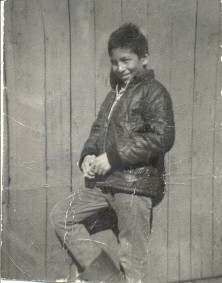
This is Chanie Wenjack, an Anishinaabe boy from Ontario, who ran away from his Residential School – the Cecilia Jeffrey School – near Kenora at the age of 12 and subsequently died from hunger and exposure to the harsh weather. His death in 1966 sparked national attention and the first inquest into the treatment of Indigenous children in Canadian residential schools.
His story was brought to the surface of Canadian consciousness again in 2016 by Gordon Downie, the late lead singer of the Tragically Hip. Downie, along with Jeff Lemire, wrote a book called the Secret Path telling Chanie’s tragic story.
If you have never read this book, you should. In fact, it should be mandatory reading for all Canadians. This may look like a children’s book, but trust me, this is NOT a children’s book. It will make you weep.
It’s even more important for us as Presbyterians to read this book – and learn about Chanie’s story – because the Cecilia Jeffrey School was run by the Presbyterian Church in Canada. Cecilia Jeffrey was a member of the Women’s Missionary Society who worked with First Nations people in northern Ontario. The Federal government took over the management of all Residential Schools in 1969 and the Cecilia Jeffrey School closed for good in 1973. In 1994, the Presbyterian Church in Canada repented for our involvement in the Residential School system and in 2003, we paid $2.1 million dollars restitution to the survivors and families of our 2 Residential Schools as mandated by the Federal government.
The story of the Residential School system – and the church’s active and often, eager participation in it – is a story that needs to be told. As uncomfortable as it is, we need to hear it. Even though most of us had nothing to do the Residential School system, we need to learn about it. We need to be reconciled with the painful truth of our shared history as Canadians and Presbyterians so that we can repent and work for justice, healing, and reconciliation in our society and denomination.
And may these things NEVER happen again!
We have come a long way since 1966 when Chanie ran away from our Residential School, but we have a long way to go.
Here are some resources to help us learn and grow:
- Truth and Reconciliation Commission of Canada and its Calls to Action
- Presbyterian Church in Canada’s Healing and Reconciliation ministries
- Presbyterian Church in Canada’s Indigenous Ministries
- University of Alberta’s FREE 12 part course called “Indigenous Canada”
- Phyllis Webstad’s Orange Shirt Society
David Robertson’s book 52 Ways to Reconcile: How to Walk With Indigenous People on the Path to Healing is also great for congregations.
If you are a reader, I highly recommend exploring the writings of amazing Indigenous authors in Canada, including:
- Cherie Dimaline – The Marrow Thieves (one of my all-time favourite books!)
- Dawn Dumont
- Thomas King
- Richard Wagamese
Finally, check out Calgary Public’s library list of Canadian Indigenous authors.
Peace, Rev. Emma
- God doesn’t live here anymore
Our problem is not so much finding the answer as it is facing the answer.
Michael Wood Daly
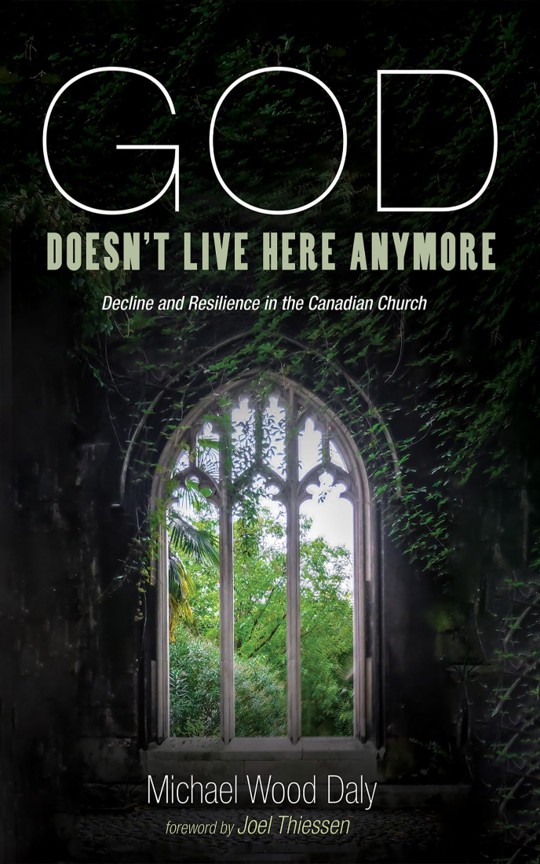
As a lifelong reader and former librarian, I know that summer is often the time when many people prefer ‘beach reads’ aka books that are light and quick to read. I do not fall into that category. I prefer non-fiction generally and am currently reading a book on Germany’s first woman chancellor, Angela Merkel and another book on the rise of AI. Not exactly light reading!
This summer, I also read a book by Michael Wood Daly called God doesn’t live here anymore. Wood Daly is a Canadian pastor, church leader, writer, and researcher who is passionate about community development and change leadership.[1] He is the founder of the Halo Project Canada, Flourishing Congregations, and is also involved in Releven, a Canadian organization that helps congregations reimagine their physical spaces.
This was also not light reading, but worth it! In fact, this is probably one of the most important books that I have read regarding the state of the Church in Canada. In this book, Wood Daly provides a history of Christianity and how it spread in Canada. He does an excellent job of connecting the history of Christianity in Canada with our relationship with Indigenous peoples, a history that is sadly full of manipulation and abuse.
While I highly recommend this book, that doesn’t mean that it was an easy read. Wood Daly forces us to confront our past and to see that we cannot blame the decline of the church on the world on the other side of our church walls. We have to shoulder much of the blame ourselves. He also reminds us that we also have an opportunity to change the future, if we are brave enough to listen to and answer God’s call.
In the final chapter, he says these prophetic words:
The institution we have come to call the church is dying. The decline is not just a social or cultural phenomenon, but also a natural consequence of past action and present apathy. God is dismantling the church. God is naming the idols we have built. God is extinguishing the political, cultural, and economic power we have accumulated over the centuries. God is exposing our inability to see our faults and unwillingness to change. God is calling us out of our fear toward something new. But are we listening? Are we willing to answer the call?(God doesn’t live here anymore, pages 190-191)
Challenging words indeed.
Blessings, Rev. Emma
- What does a flourishing congregation look like?
I am always interested in Canadian content. We are similar to the US in many ways, but there are also significant differences.
I recently watched an interview in the Maple Spirit Pulse Series sponsored by the Institute for Religion, Culture and Societal Futures (IRCSF). The IRCSF is a Canadian, non-partisan organization specializing in social scientific and empirical research related to religion, spirituality, and emerging forms of communities of belief and practice.
The host, the Dr. Sarah Wilkins-Laflamme (University of Waterloo) interviewed Dr. Joel Thiessen (Ambrose University) about the research on the key indicators of a flourishing congregation in the Canadian context. Dr. Thiessen is also a part of Flourishing Congregations, another organization that studies the religious landscape here in Canada.
In this interview, Dr. Thiessen states that flourishing congregations are not necessarily about the numbers – the number of ‘bums in the pews’ or the amount of money in the bank. Large congregations do exist in Canada, but that doesn’t necessarily mean that they are doing well.
He gave three main categories that are used to measure how well a congregation is doing and they are as follows:
- Organizational dynamics
How do they self-identify?
Are they open to change and innovation?
How do they develop leaders?
What are their structural processes?
2. Internal dynamics
How do they encourage discipleship and spiritual formation?
How do people engage in their social networks?
Do they foster diversity?
How are the laity engaged?
3. Outward focus
How are they connected with the community?
Do they engage in evangelism?
Do they engage in community partnerships?
It was also acknowledged that there are many external factors that influence how congregations flourish. The changing religious landscape in Canada is an obvious factor. Immigration has also been a factor for many congregations.
Another interesting trend that was briefly discussed is the ‘circulation of the saints.’ Loyalty to a specific congregation or denomination is declining and with the rise of congregations broadcasting their services online, Christians are on the move – aka church shopping – more so than ever before. So, one congregation may be seeing in rise in their attendance and givings not because of evangelism or discipleship, but because people have left another congregation.
To be sure these are challenging times to be engaged in ministry in Canada!
In what ways is your congregation flourishing? How is God planting seeds of hope and joy?
Blessings, Rev. Emma Duncan
General Presbyter
- Come to me and I will give you rest
Ministry is hard.
But you already knew that!
When this blog post becomes active, I will be on vacation with my family. What a blessing it is to have this time away!
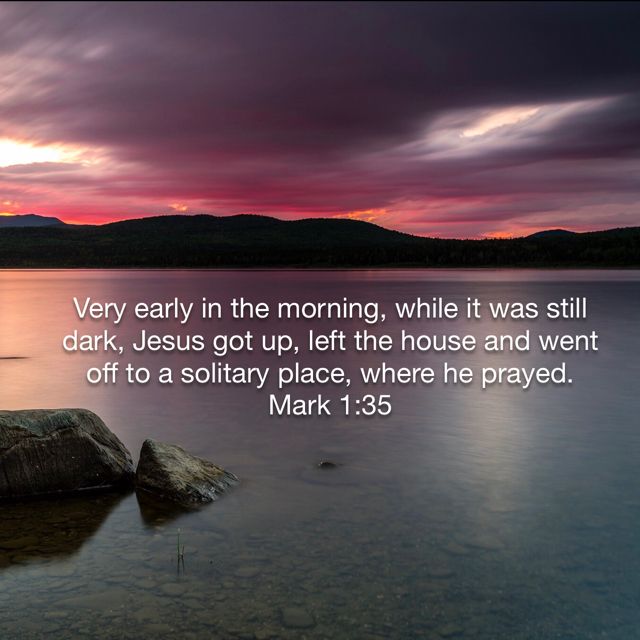
In a society that values busyness and productivity, it is important for us as Christians to remember that our faith calls us to care for ourselves – body, mind, and soul. Rest is biblical. Spending time alone with the Lord is biblical. Setting boundaries is biblical.
And these biblical truths are not just for when we are on vacation! We are encouraged to nurture our personal faith in every season of life. As church leaders, it is important for us to model Christ’s example of taking time away from the pressures of ministry and spending time with God in prayer, study, and reflection. When I was struggling with this a few years ago, my Spiritual Director challenged me with this question – how can you care for your Congregation if you can’t care for yourself?
This was a difficult question to answer because I knew that she was right.
We all need to be reminded to make time to be with the Lord – not for sermon prep or Bible study, but to nurture our own souls. We all need to set boundaries that protect our personal faith and our time with family and friends.
While I am no expert in this field, I encourage you to find ways to model Christ in your own life. There are many ways to do this that don’t take a lot of time or cost any money. And since we are all unique, you have to find what works for you. For example, I am not a morning person, so please don’t tell me to get up early to pray – it’s not going to happen!
As a fellow traveller and seeker, I simply encourage you to strengthen your walk with the Lord.
Blessings, Rev. Emma
General Presbyter